The Frontier Firm era has begun
The AI Operating System for Frontier Firms
A new kind of organization has emerged - powered by intelligence on tap and human-agent teams. Only 22% of companies have made the transition. The rest are running out of time. The question isn't if. It's whether you'll lead or follow.

Trusted by growth-stage companies transforming into Frontier Firms


The New Reality
Intelligence on tap will rewire business. Every leader needs a new blueprint.
For decades, intelligence was one of the most valuable - and limited - assets in business. Bound by human time, energy, and cost. To solve a problem requiring intelligence, you had to hire a person.
That's changing.
Intelligence is becoming an essential durable good: abundant, affordable, and available on demand. With AI agents that can reason, plan, and act, companies can scale capacity as never before.

This isn't incremental improvement. It's a fundamental restructuring of how organizations operate - as profound as the Industrial Revolution or the internet era.
82%
of leaders expect to use agents as digital team members in the next 12-18 months
81%
say they expect agents to be integrated into their AI strategy in the next 12-18 months
24%
of leaders say their companies have already deployed AI organization-wide
"Like the digital-native companies of a generation ago, Frontier Firms understand the power of pairing irreplaceable human insight with AI and agents to unlock outsize value."

Work Trend Index 2025
The New Reality
Intelligence on tap will rewire business. Every leader needs a new blueprint.
For decades, intelligence was one of the most valuable - and limited - assets in business. Bound by human time, energy, and cost. To solve a problem requiring intelligence, you had to hire a person.
That's changing.
Intelligence is becoming an essential durable good: abundant, affordable, and available on demand. With AI agents that can reason, plan, and act, companies can scale capacity as never before.
This isn't incremental improvement. It's a fundamental restructuring of how organizations operate - as profound as the Industrial Revolution or the internet era.
82%
of leaders expect to use agents as digital team members in the next 12-18 months
81%
say they expect agents to be integrated into their AI strategy in the next 12-18 months
24%
of leaders say their companies have already deployed AI organization-wide
"Like the digital-native companies of a generation ago, Frontier Firms understand the power of pairing irreplaceable human insight with AI and agents to unlock outsize value."
Work Trend Index 2025



The Definition
Frontier Firm:
A new kind of organization
Frontier Firm
/ˈfrənˌtir fərm/
noun
A company powered by intelligence on tap and human-agent teams, where every employee works alongside a dedicated team of AI agents. Frontier Firms scale rapidly, operate with agility, and generate value faster.

Agent
An AI-powered system that can reason, plan, and act to complete tasks or entire workflows autonomously, with human oversight at key moments.
Your Dedicated Team
Every employee works alongside AI agents that monitor, execute, and report back.
Intelligence on Tap
On-demand access to AI-powered intelligence — abundant, affordable, available when needed.
Capacity Gap
The deficit between business demands and the maximum capacity of humans alone to meet them.
Human-Agent Teams
Teams composed of both humans and AI agents, working together on shared goals.
Human-Agent Ratio
A new business metric that optimizes the balance of human oversight with agent efficiency.
Work Chart
The next org chart - structured not around functional expertise but around jobs that need to be done.
Intelligence Resources
A new function dedicated to managing digital labor on an organizational level - a blend of IT and HR.
Agent
An AI-powered system that can reason, plan, and act to complete tasks or entire workflows autonomously, with human oversight at key moments.
Your Dedicated Team
Every employee works alongside AI agents that monitor, execute, and report back.
Intelligence on Tap
On-demand access to AI-powered intelligence — abundant, affordable, available when needed.
Capacity Gap
The deficit between business demands and the maximum capacity of humans alone to meet them.
Human-Agent Teams
Teams composed of both humans and AI agents, working together on shared goals.
Human-Agent Ratio
A new business metric that optimizes the balance of human oversight with agent efficiency.
Work Chart
The next org chart - structured not around functional expertise but around jobs that need to be done.
Intelligence Resources
A new function dedicated to managing digital labor on an organizational level - a blend of IT and HR.
These aren't future concepts. They're emerging now. The organizations that master them first will define the next era of business.

The Transformation Path
The journey to the
Frontier Firm
Every organization's AI transformation will look different. But the path follows three phases - and in many cases, organizations will be in all three simultaneously.


Phase 1
Every employee has an AI assistant that helps them work better and faster. AI removes the drudgery of work.
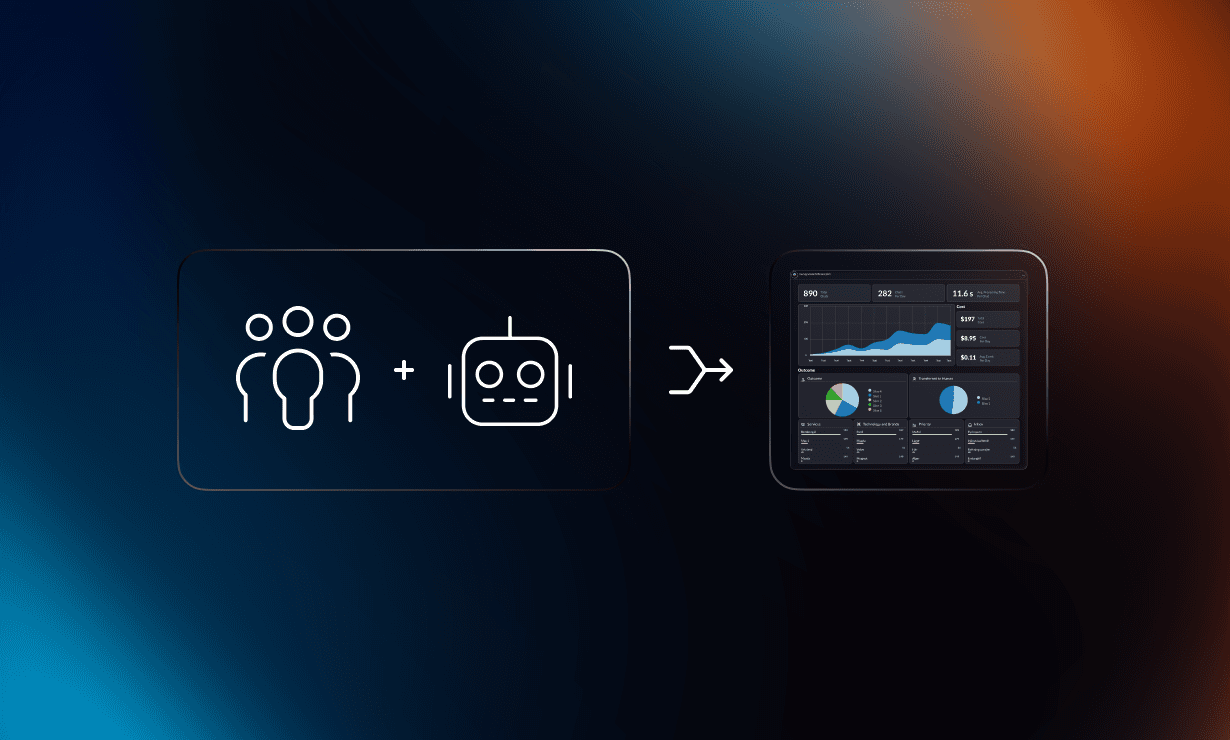
Phase 2
Agents join teams as digital colleagues, taking on specific tasks at human direction. Dex orchestrates your specialist agents.
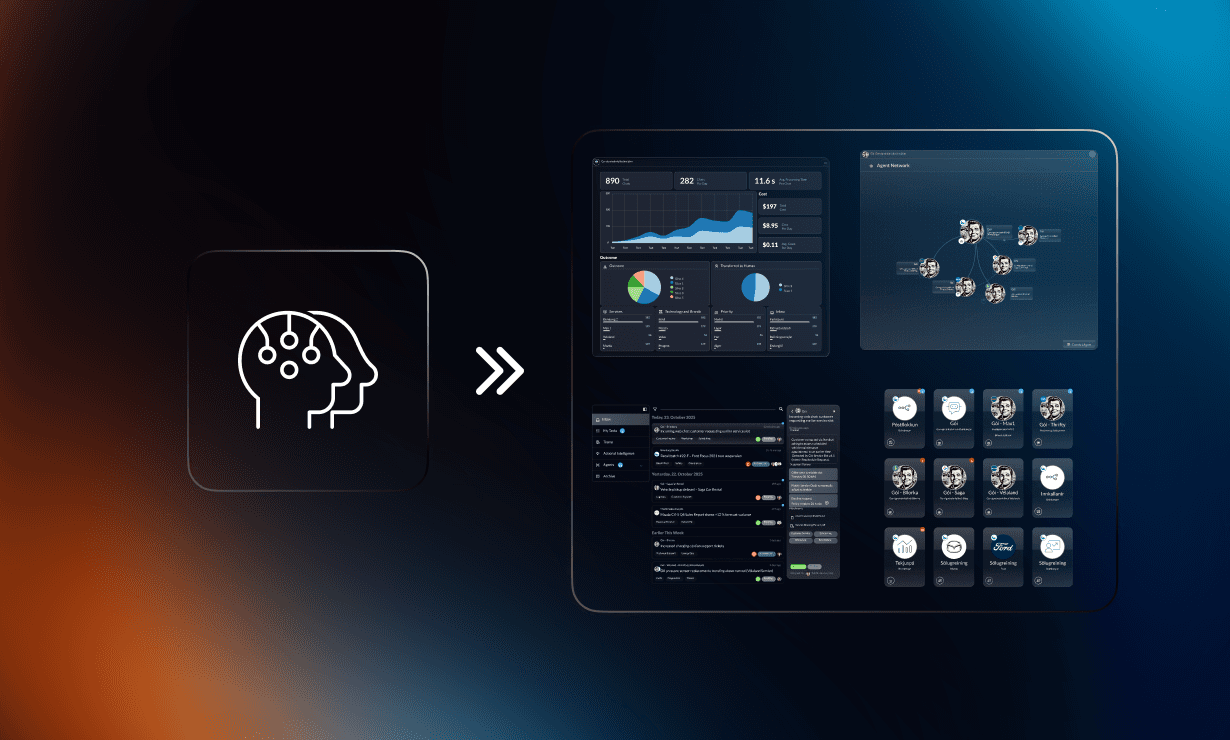
Phase 3
Humans set direction and agents execute entire business processes, checking in as needed.
"In Frontier Firms, even entry-level employees are managers from day one - because they're managing AI."
Work Trend Index 2025
The Transformation Path
The journey to the
Frontier Firm
Every organization's AI transformation will look different. But the path follows three phases - and in many cases, organizations will be in all three simultaneously.
Phase 1
Every employee has an AI assistant that helps them work better and faster. AI removes the drudgery of work.
Phase 2
Agents join teams as digital colleagues, taking on specific tasks at human direction. Dex orchestrates your specialist agents.
Phase 3
Humans set direction and agents execute entire business processes, checking in as needed.
"In Frontier Firms, even entry-level employees are managers from day one - because they're managing AI."
Work Trend Index 2025
The Transformation Path
The journey to the
Frontier Firm
Every organization's AI transformation will look different. But the path follows three phases - and in many cases, organizations will be in all three simultaneously.
Phase 1
Every employee has an AI assistant that helps them work better and faster. AI removes the drudgery of work.
Phase 2
Agents join teams as digital colleagues, taking on specific tasks at human direction. Dex orchestrates your specialist agents.
Phase 3
Humans set direction and agents execute entire business processes, checking in as needed.
"In Frontier Firms, even entry-level employees are managers from day one - because they're managing AI."
Work Trend Index 2025
The Frontier Firm era has begun
Business demands outpace human capacity. Something has to change.
Today's work is pushing the limits of what humans alone can deliver. Employees are maxed out. Productivity demands keep rising. The gap between what the business needs and what people can sustainably provide keeps widening.
This is the capacity gap - and it's the fundamental driver of the Frontier Firm transformation.

In companies growing 20-40% year over year, employees must improve by at least that much just to stay in place. The bar keeps rising. What got your team here won't keep them here.
Your people aren't failing because they're not working hard enough. They're failing because they're running the Red Queen race alone - without leverage.
The Red Queen Reality
The phrase comes from Lewis Carroll's Through the Looking-Glass, where the Red Queen tells Alice: "Now, here, you see, it takes all the running you can do, to keep in the same place."
Shopify CEO Tobi Lütke has long operated under what he calls the Red Queen Framework. In April 2025, he made it explicit: "Reflexive AI usage is now a baseline expectation. Before asking for more headcount and resources, teams must demonstrate why they cannot get what they want done using AI."

80%
of global workforce say they lack enough time or energy to do their work
53%
of leaders say productivity must increase

275
interruptions per day during work hours (meetings, emails, pings)
60%
of meetings are ad hoc versus scheduled
Digital labor
AI agents that can be purchased on demand - offers a new lever for growth. One that helps close the gap between what businesses demand and what humans can sustainably deliver.
"For decades, to solve a problem requiring intelligence, you had to hire a person. Now, intelligence is available as a scalable resource."
The Evidence
Frontier Firms are already proving what's possible
Among 31,000 workers surveyed globally, those at Frontier Firms - defined by org-wide AI deployment, advanced AI maturity, current agent use, and belief that agents are key to ROI - report dramatically better outcomes.
Metric
Frontier Firms
Global Average

"Company is thriving"
71%
37%
"Able to take on more work"
55%
20%
"Optimistic about future"
90%
73%
"Opportunities for meaningful work"
93%
77%
"Fear AI will take my job"
21%
38%
"In Frontier Firms, even entry-level employees are managers from day one - because they're managing AI."
Work Trend Index 2025
Real Examples:
Early Adopters Leading the Way

Dow
Deploying agents to find hidden losses and streamline shipping. Expected savings: millions in the first year from increased accuracy in logistics rates and billing.

Wells Fargo
Built an agent for 35,000 bankers across 4,000 branches. Query response times cut from 10 minutes to 30 seconds. 75% of searches now happen through the agent.

Bayer
Researchers on Crop Science R&D team each save up to 6 hours per week with agent assistance, accelerating product development.

The Estée Lauder Companies
Built an agent to identify and consolidate consumer insights. Teams now pull up actionable intelligence instantly instead of sifting through scattered reports.
These are the early adopters. They point to where things are headed. And the gap between leaders and laggards compounds every day.

The U-Shaped Talent Market
The talent market is restructuring into a U-shape: extreme demand for senior leaders who can multiply their impact with AI, AND early-career people who are AI-native from day one. The middle - experienced but not AI-fluent - faces increasing pressure.
Frontier Firms attract both ends of that U. They offer senior leaders leverage without learning to code, and new employees the infrastructure to be productive from day one. For the middle? A path to AI fluency that doesn't require starting over.
The Evidence
Frontier Firms are already proving what's possible
Among 31,000 workers surveyed globally, those at Frontier Firms - defined by org-wide AI deployment, advanced AI maturity, current agent use, and belief that agents are key to ROI - report dramatically better outcomes.
Metric
Frontier Firms
Global Average
"Company is thriving"
71%
37%
"Able to take on more work"
55%
20%
"Optimistic about future"
90%
73%
"Opportunities for meaningful work"
93%
77%
"Fear AI will take my job"
21%
38%
"In Frontier Firms, even entry-level employees are managers from day one - because they're managing AI."
Work Trend Index 2025
Real Examples:
Early Adopters Leading the Way
Dow
Deploying agents to find hidden losses and streamline shipping. Expected savings: millions in the first year from increased accuracy in logistics rates and billing.
Wells Fargo
Built an agent for 35,000 bankers across 4,000 branches. Query response times cut from 10 minutes to 30 seconds. 75% of searches now happen through the agent.
Bayer
Researchers on Crop Science R&D team each save up to 6 hours per week with agent assistance, accelerating product development.
The Estée Lauder Companies
Built an agent to identify and consolidate consumer insights. Teams now pull up actionable intelligence instantly instead of sifting through scattered reports.
These are the early adopters. They point to where things are headed. And the gap between leaders and laggards compounds every day.
The U-Shaped Talent Market
The talent market is restructuring into a U-shape: extreme demand for senior leaders who can multiply their impact with AI, AND early-career people who are AI-native from day one. The middle - experienced but not AI-fluent - faces increasing pressure.
Frontier Firms attract both ends of that U. They offer senior leaders leverage without learning to code, and new employees the infrastructure to be productive from day one. For the middle? A path to AI fluency that doesn't require starting over.
The Evidence
Frontier Firms are already proving what's possible
Among 31,000 workers surveyed globally, those at Frontier Firms - defined by org-wide AI deployment, advanced AI maturity, current agent use, and belief that agents are key to ROI - report dramatically better outcomes.
Metric
Frontier Firms
Global Average
"Company is thriving"
71%
37%
"Able to take on more work"
55%
20%
"Optimistic about future"
90%
73%
"Opportunities for meaningful work"
93%
77%
"Fear AI will take my job"
21%
38%
"In Frontier Firms, even entry-level employees are managers from day one - because they're managing AI."
Work Trend Index 2025
Real Examples:
Early Adopters
Leading the Way
Dow
Deploying agents to find hidden losses and streamline shipping. Expected savings: millions in the first year from increased accuracy in logistics rates and billing.
Wells Fargo
Built an agent for 35,000 bankers across 4,000 branches. Query response times cut from 10 minutes to 30 seconds. 75% of searches now happen through the agent.
Bayer
Researchers on Crop Science R&D team each save up to 6 hours per week with agent assistance, accelerating product development.
The Estée Lauder Companies
Built an agent to identify and consolidate consumer insights. Teams now pull up actionable intelligence instantly instead of sifting through scattered reports.
These are the early adopters. They point to where things are headed. And the gap between leaders and laggards compounds every day.
The
U-Shaped Talent Market
The talent market is restructuring into a U-shape: extreme demand for senior leaders who can multiply their impact with AI, AND early-career people who are AI-native from day one. The middle - experienced but not AI-fluent - faces increasing pressure.
Frontier Firms attract both ends of that U. They offer senior leaders leverage without learning to code, and new employees the infrastructure to be productive from day one. For the middle? A path to AI fluency that doesn't require starting over.
The Platform

The Operating System for Frontier Firms
Becoming a Frontier Firm requires more than deploying AI tools. It requires infrastructure - a foundation that lets agents understand your business, operate within governed boundaries, and scale across your organization. This is what FraiOS provides.
Today's work is pushing the limits of what humans alone can deliver. Employees are maxed out. Productivity demands keep rising. The gap between what the business needs and what people can sustainably provide keeps widening.
This is the capacity gap - and it's the fundamental driver of the Frontier Firm transformation.
Why Most AI Projects Fail:
The Context Gap
AI systems receive fragmented data stripped of business logic, relationships, and meaning. They become "faster, more confident generators of incorrect answers." This is the Context Gap - and it's why 95% of AI pilots fail to reach production (MIT 2025).
Cognizant estimates AI could unlock $4.5 trillion in US labor productivity. But there's a massive caveat: the value only materializes if businesses can implement it effectively.

McKinsey found that 88% of companies are already using AI - but most are stuck in what they call "pilot purgatory": endless experiments that never scale, never lead to real change. Gartner predicts 40%+ of agentic AI projects will fail by 2027 without proper foundations. Only 21% of enterprises have proper governance for autonomous agents.
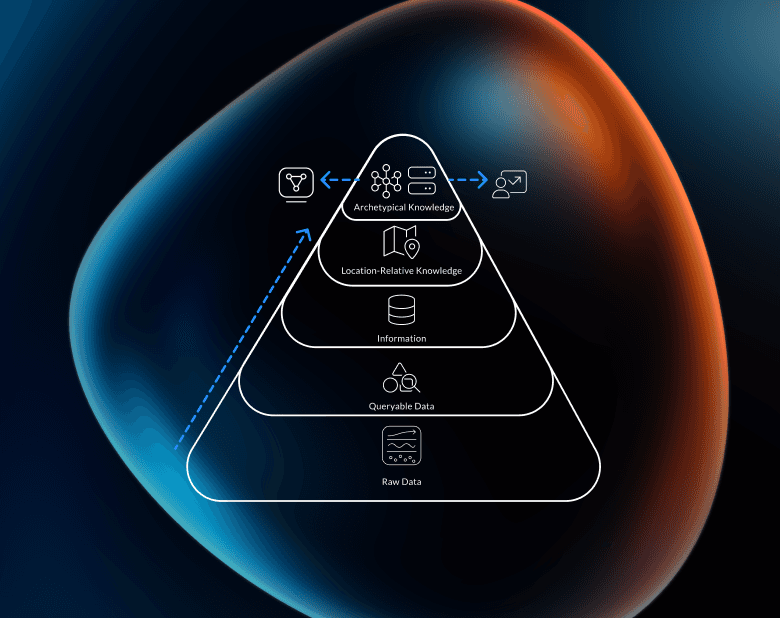
Pilot purgatory is a context problem. Pilots work because context can be manually provided in narrow domains. Scaling fails because systematic context - ontology that covers the whole business - doesn't exist. Standard Vector RAG (the default AI approach) achieves ~0% accuracy on schema-bound business queries like "What's the total contract value of at-risk customers?" - because it can't compute, only guess.
The technology isn't the problem. The bottleneck is context.
The technology isn't the problem.
The bottleneck is context.

Why This Creates Trust:
AI on Rails
Here's what most people miss about AI trust: the problem isn't AI accuracy - it's what AI produces.
When AI writes a report, you have to ask: "Is this true?" The AI generated prose, and prose can hallucinate.
When FraiOS builds a dashboard, you ask: "Does this work?" The dashboard runs on your real data. The numbers come from your actual systems. If it's wrong, you see it immediately - because it's operating on truth.
We don't use AI to write documents that might include hallucinations. We use AI to build business utilities on top of truth.

The sales dashboard your team creates conversationally? It's sitting on real data, using real formulas, producing real metrics - as reliable as if your best analyst built it manually. The AI didn't describe your performance. It built an instrument that measures it. Every output is verifiable, navigatable, and customizable — as if your best specialist built it by hand. The trust isn't something you have to establish. It's built into every artifact by design.
Four Things That Make Frontier Firms Possible
Four Things That Make
Frontier Firms Possible
Agent Understanding
Human Oversight
Governance
Output Trust
Without FraiOS
Fragmented data,
confident mistakes
Black box — hope it's working
Manual policies, compliance burden
AI prose that might hallucinate
With FraiOS
Full business context, grounded decisions
Full visibility — semantic logging
Embedded governance from day one
Artifacts on real data — verified by operation
The Comparative Performance Reality
The Comparative
Performance Reality

Approach
Approach
Setup Time
Setup Time
Accuracy
Accuracy
Cost
Cost
Manual Engineering
12–18 months
~95%
Human services ($$$)
Manual Engineering
12–18 months
~95%
Human services ($$$)


Vector RAG
Minutes
~0%
Compute ($)
Vector RAG
Minutes
~0%
Compute ($)


Auto-Generation
Days
>90%
Compute ($$)
Auto-Generation
Days
>90%
Compute ($$)
This isn't marketing. It's architecture. Enterprise companies spend $1M+ and 18 months building what FraiOS generates automatically - because their data is messy and unstructured. Your SaaS data is already structured. The ontology is implicit in how your systems work. We make it explicit.
Agent Understanding
Fragmented data, confident mistakes
Full business context, grounded decisions
Output Trust
Black box — hope it's working
Full visibility — semantic logging
Governance
Manual policies, compliance burden
Embedded governance from day one
Human Oversight
AI prose that might hallucinate
Artifacts on real data — verified by operation
With FraiOS
Without FraiOS

The Architecture
Four pillars. One unified foundation.
FraiOS answers the four questions every CEO asks when deploying AI at scale. But the pillars aren't equal - Context is the foundation that makes everything else work.

Foundation
Context
"Will AI understand my business?"
Business Ontology + Semantic Events + Event Bible. Every business activity becomes an enriched semantic event. These weave into a living Business Ontology - entities, relationships, and rules that AI can reason over. Context is what makes AI work. The other pillars make it safe and visible. Without context, observability shows events without meaning, governance enforces rules without understanding, and orchestration coordinates actions without purpose. With context, everything has business meaning.
100% Visibility
Observability
"What's happening?"
100% visibility via semantic logging. Track who did what, when, how, and with what consequences. Every AI decision, action, and outcome logged as semantic events. Know exactly what autonomy costs with built-in FinOps for AI



Trust & Control
Governance
"Who's in control?"
Agents as users with fine-grained access + Verifiable artifacts. Agents are treated exactly like you'd treat a new human employee: unique identity, clear permissions for what they can and can't access, monitored activity. Enterprise identity management via WorkOS — integrating seamlessly with your existing Okta, Entra, or Google Workspace SSO. Governance embedded in architecture, not bolted on after. Everything agents build - dashboards, workflows, models, analyses - operates on your real data. These aren't AI-generated documents that might be wrong. They're functional artifacts you can verify by operation.
Easy Scaling
Orchestration
"How do I scale this?"
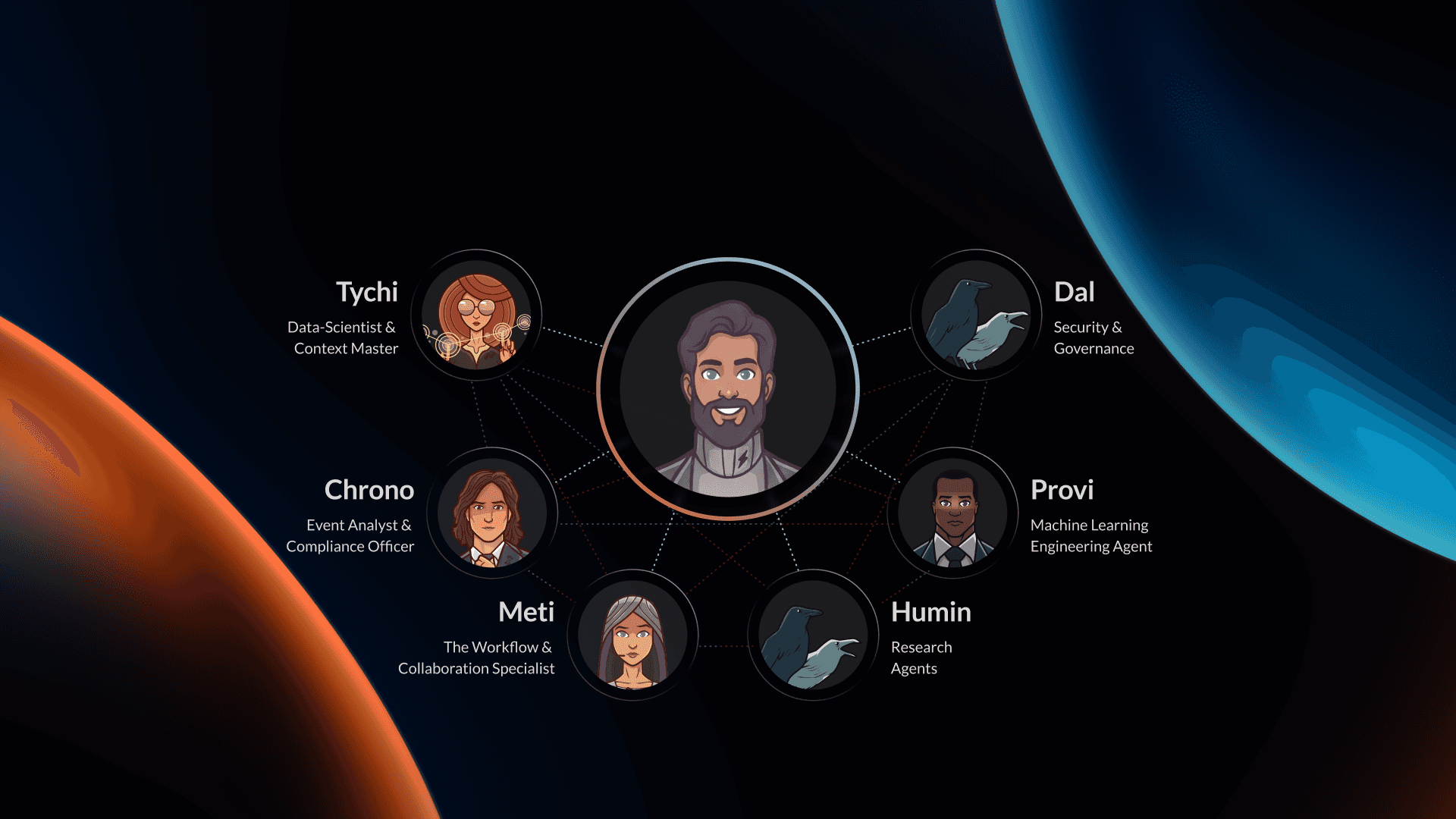
Easy agent creation backed by Business Ontology. Create, deploy, and manage agents as easily as assigning work to a new team member. Business users build agents through conversation - no technical skills required.

The Four Cs
Your team experiences these as:
Collaboration
AI builds, you lead (so humans stay at the center)

Context
Visibility into everything (so you see what's happening)

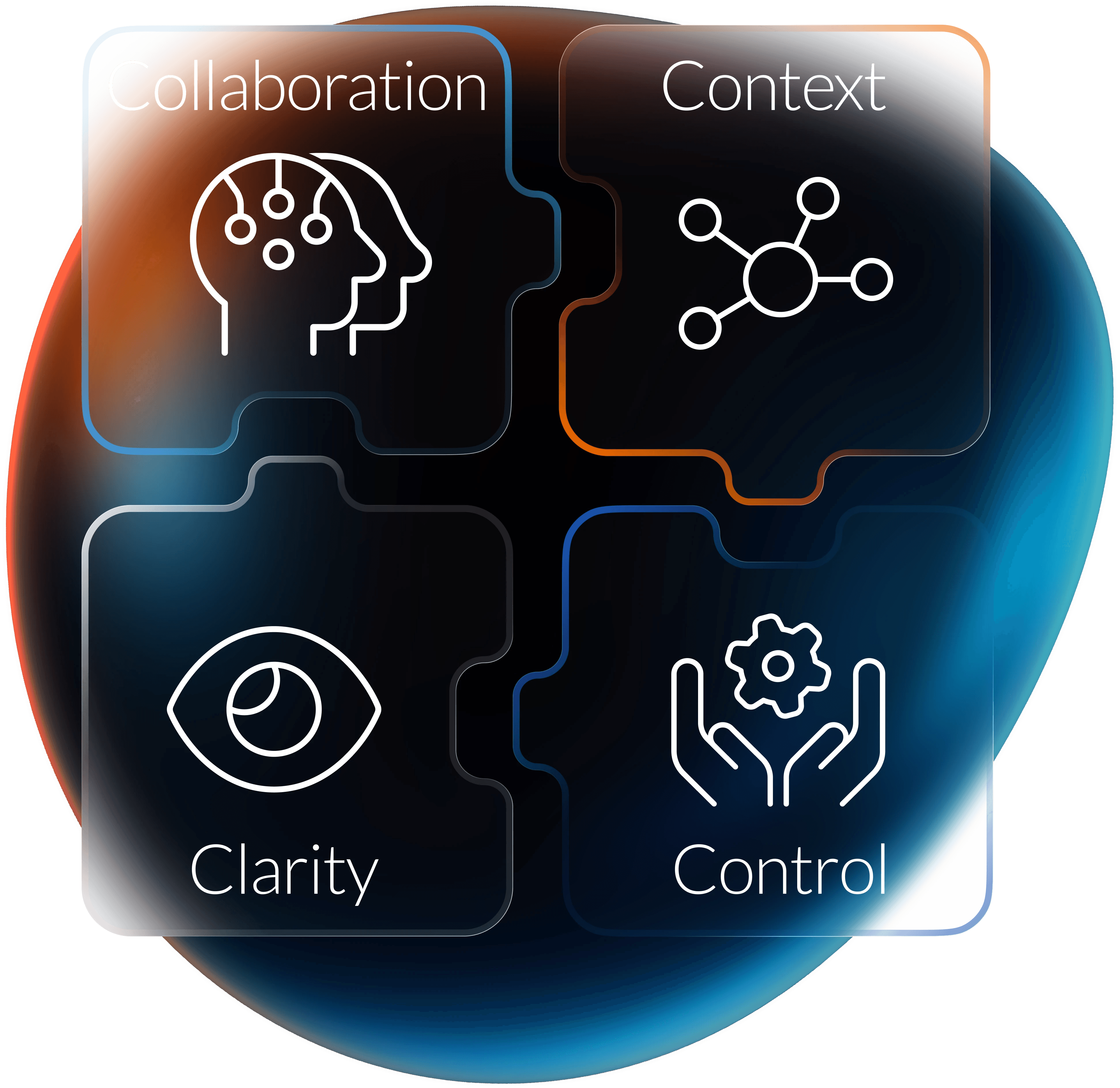
Clarity
Understanding your business (so AI knows what it's doing)

Control
Governance and boundaries (so you stay in charge)

These technical pillars unite around
one human-centered principle:
You are always in command.
AI multiplies your impact.
The Architecture Difference
"Everyone's adding agents to their stack. We built a stack for agents. That's the difference between impressive demos and production deployments that actually work."
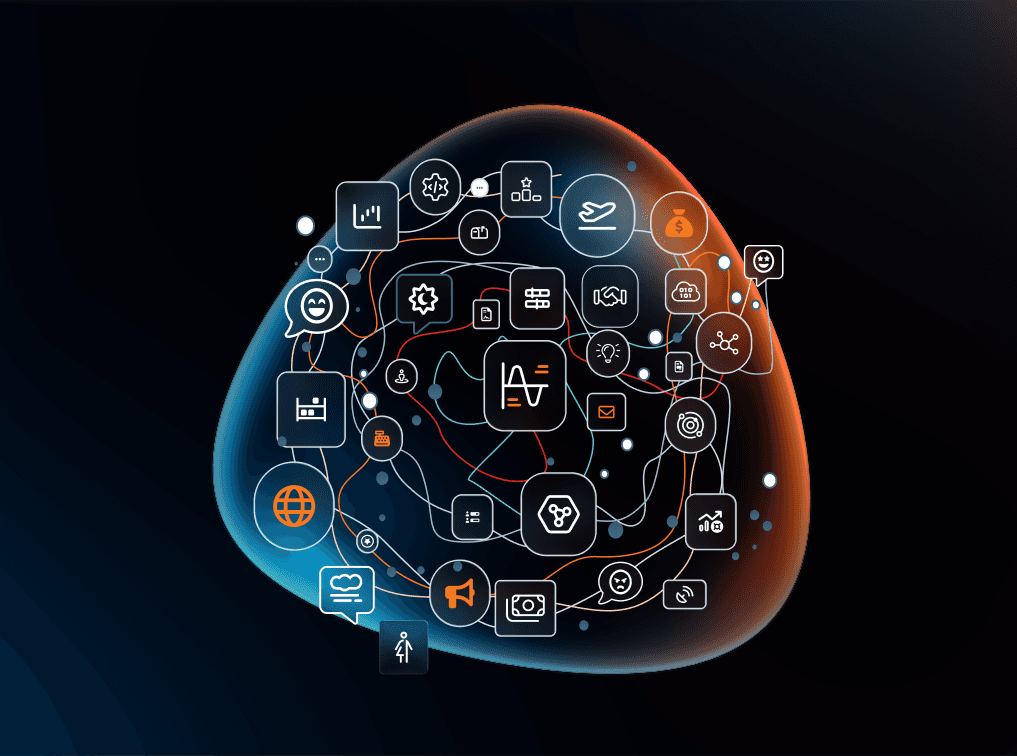
Other platforms bolt semantic layers onto existing automation engines. FraiOS was built context-first.
Why the giants can't build this
Salesforce builds AI for Salesforce data. Microsoft builds it for Azure/Fabric. Single-vendor AI will never span beyond that vendor's ecosystem - cross-stack synthesis commoditizes their platform advantage. Mid-market companies use Salesforce CRM + NetSuite ERP + Snowflake + Slack. FraiOS creates a unified ontology across the silos the giants refuse to bridge - and every deployment becomes more valuable the longer it runs, because the semantic layer learns how your business works.
We build the ontology.
Others require you to bring it.
OpenAI Frontier ($10M minimum, consulting-led) requires organizations to supply their own semantic context. Palantir ($7.7M average ACV) charges millions to build it for you. Salesforce Agentforce (22,000+ deals) works only inside Salesforce's ecosystem. FraiOS auto-generates a business ontology from your SaaS stack - entities, relationships, metrics, logic - in days.

We build the ontology
Others require you to bring it or pay millions to have it built

Deeper usage = higher switching costs
The semantic layer learns how your business works; custom agents, rules, and workflows compound over time

Governance built in, not bolted on
Only 21% of enterprises have proper agent governance. FraiOS builds control into every interaction

Deploy where compliance demands
Cloud or on-prem. EU AI Act high-risk provisions take effect August 2, 2026. On-prem inference is 2.6-4.1x more cost-effective for continuous workloads
Deploy where your data lives
On-prem deployment means the ontology, knowledge graph, and intelligence never leave your infrastructure. No competitive exposure to model providers
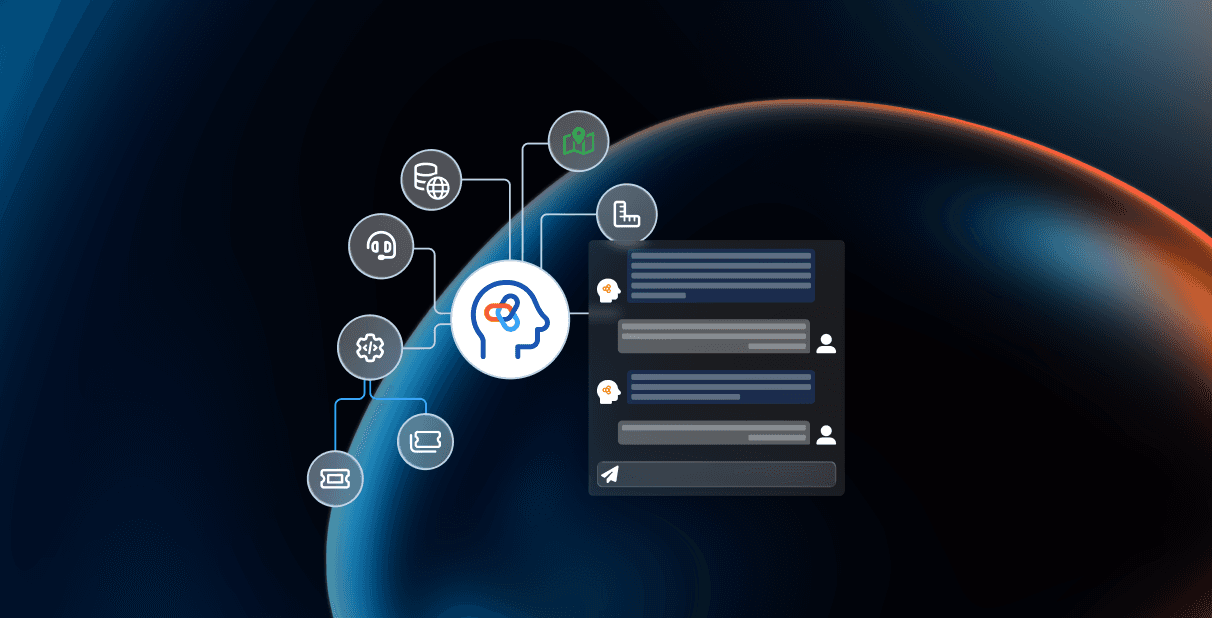
FraiOS ships with a team of specialist agents, ready from day one
Named Agents that understand your business context and operate within your governance boundaries from the moment of deployment. No learning curve. No ramp-up time. Just working.
BYO-Agent Strategy:
Don't let your AI agents become the new data silos. Whether you're using Sierra for customer service, Cognition for coding, or ChatGPT for general tasks - FraiOS provides the unified context layer. "Bring your own Agent. We provide the Context." This positions FraiOS as the essential infrastructure that makes your vertical agents actually work together.
The Architecture
Four pillars. One unified foundation.
FraiOS answers the four questions every CEO asks when deploying AI at scale. But the pillars aren't equal - Context is the foundation that makes everything else work.
Foundation
Context
"Will AI understand my business?"
Business Ontology + Semantic Events + Event Bible. Every business activity becomes an enriched semantic event. These weave into a living Business Ontology - entities, relationships, and rules that AI can reason over. Context is what makes AI work. The other pillars make it safe and visible. Without context, observability shows events without meaning, governance enforces rules without understanding, and orchestration coordinates actions without purpose. With context, everything has business meaning.
100% Visibility
Observability
"What's happening?"
100% visibility via semantic logging. Track who did what, when, how, and with what consequences. Every AI decision, action, and outcome logged as semantic events. Know exactly what autonomy costs with built-in FinOps for AI
Trust & Control
Governance
"Who's in control?"
Agents as users with fine-grained access + Verifiable artifacts. Agents are treated exactly like you'd treat a new human employee: unique identity, clear permissions for what they can and can't access, monitored activity. Enterprise identity management via WorkOS — integrating seamlessly with your existing Okta, Entra, or Google Workspace SSO. Governance embedded in architecture, not bolted on after. Everything agents build - dashboards, workflows, models, analyses - operates on your real data. These aren't AI-generated documents that might be wrong. They're functional artifacts you can verify by operation.
Easy Scaling
Orchestration
"How do I scale this?"
Easy agent creation backed by Business Ontology. Create, deploy, and manage agents as easily as assigning work to a new team member. Business users build agents through conversation - no technical skills required.
The Four Cs
Your team experiences these as:
Collaboration
AI builds, you lead (so humans stay at the center)
Context
Understanding your business (so AI knows what it's doing)
Clarity
Visibility into everything (so you see what's happening)
Control
AI builds, you lead (so humans stay at the center)
These technical pillars unite around
one human-centered principle:
You are always in command.
AI multiplies your impact.
The Architecture Difference
"Everyone's adding agents to their stack. We built a stack for agents. That's the difference between impressive demos and production deployments that actually work."
Other platforms bolt semantic layers onto existing automation engines. FraiOS was built context-first.
Why the giants can't build this
Salesforce builds AI for Salesforce data. Microsoft builds it for Azure/Fabric. Single-vendor AI will never span beyond that vendor's ecosystem - cross-stack synthesis commoditizes their platform advantage. Mid-market companies use Salesforce CRM + NetSuite ERP + Snowflake + Slack. FraiOS creates a unified ontology across the silos the giants refuse to bridge - and every deployment becomes more valuable the longer it runs, because the semantic layer learns how your business works.
We build the ontology.
Others require you to bring it.
OpenAI Frontier ($10M minimum, consulting-led) requires organizations to supply their own semantic context. Palantir ($7.7M average ACV) charges millions to build it for you. Salesforce Agentforce (22,000+ deals) works only inside Salesforce's ecosystem. FraiOS auto-generates a business ontology from your SaaS stack - entities, relationships, metrics, logic - in days.
We build the ontology
Others require you to bring it or pay millions to have it built
Deeper usage = higher switching costs
The semantic layer learns how your business works; custom agents, rules, and workflows compound over time
Governance built in, not bolted on
Only 21% of enterprises have proper agent governance. FraiOS builds control into every interaction
Deploy where compliance demands
Cloud or on-prem. EU AI Act high-risk provisions take effect August 2, 2026. On-prem inference is 2.6-4.1x more cost-effective for continuous workloads
Deploy where your data lives
On-prem deployment means the ontology, knowledge graph, and intelligence never leave your infrastructure. No competitive exposure to model providers
FraiOS ships with a team of specialist agents, ready from day one
Named Agents that understand your business context and operate within your governance boundaries from the moment of deployment. No learning curve. No ramp-up time. Just working.
BYO-Agent Strategy:
Don't let your AI agents become the new data silos. Whether you're using Sierra for customer service, Cognition for coding, or ChatGPT for general tasks - FraiOS provides the unified context layer. "Bring your own Agent. We provide the Context." This positions FraiOS as the essential infrastructure that makes your vertical agents actually work together.
The Architecture
Four pillars.
One unified foundation.
FraiOS answers the four questions every CEO asks when deploying AI at scale. But the pillars aren't equal - Context is the foundation that makes everything else work.
Foundation
Context
"Will AI understand my business?"
Business Ontology + Semantic Events + Event Bible. Every business activity becomes an enriched semantic event. These weave into a living Business Ontology - entities, relationships, and rules that AI can reason over. Context is what makes AI work. The other pillars make it safe and visible. Without context, observability shows events without meaning, governance enforces rules without understanding, and orchestration coordinates actions without purpose. With context, everything has business meaning.
100% Visibility
Observability
"What's happening?"
100% visibility via semantic logging. Track who did what, when, how, and with what consequences. Every AI decision, action, and outcome logged as semantic events. Know exactly what autonomy costs with built-in FinOps for AI
Trust & Control
Governance
"Who's in control?"
Agents as users with fine-grained access + Verifiable artifacts. Agents are treated exactly like you'd treat a new human employee: unique identity, clear permissions for what they can and can't access, monitored activity. Enterprise identity management via WorkOS — integrating seamlessly with your existing Okta, Entra, or Google Workspace SSO. Governance embedded in architecture, not bolted on after. Everything agents build - dashboards, workflows, models, analyses - operates on your real data. These aren't AI-generated documents that might be wrong. They're functional artifacts you can verify by operation.
Easy Scaling
Orchestration
"How do I scale this?"
Easy agent creation backed by Business Ontology. Create, deploy, and manage agents as easily as assigning work to a new team member. Business users build agents through conversation - no technical skills required.
The Four Cs
Your team experiences these as:
Collaboration
AI builds, you lead (so humans stay at the center)
Context
Visibility into everything (so you see what's happening)
Clarity
Understanding your business (so AI knows what it's doing)
Control
Governance and boundaries (so you stay in charge)
These technical pillars unite around
one human-centered principle:
You are always in command.
AI multiplies your impact.
The Architecture Difference
"Everyone's adding agents to their stack. We built a stack for agents. That's the difference between impressive demos and production deployments that actually work."
Other platforms bolt semantic layers onto existing automation engines. FraiOS was built context-first.
Why the giants can't build this
Salesforce builds AI for Salesforce data. Microsoft builds it for Azure/Fabric. Single-vendor AI will never span beyond that vendor's ecosystem - cross-stack synthesis commoditizes their platform advantage. Mid-market companies use Salesforce CRM + NetSuite ERP + Snowflake + Slack. FraiOS creates a unified ontology across the silos the giants refuse to bridge - and every deployment becomes more valuable the longer it runs, because the semantic layer learns how your business works.
We build the ontology.
Others require you to bring it.
OpenAI Frontier ($10M minimum, consulting-led) requires organizations to supply their own semantic context. Palantir ($7.7M average ACV) charges millions to build it for you. Salesforce Agentforce (22,000+ deals) works only inside Salesforce's ecosystem. FraiOS auto-generates a business ontology from your SaaS stack - entities, relationships, metrics, logic - in days.
We build the ontology
Others require you to bring it or pay millions to have it built
Deeper usage = higher switching costs
The semantic layer learns how your business works; custom agents, rules, and workflows compound over time
Governance built in, not bolted on
Only 21% of enterprises have proper agent governance. FraiOS builds control into every interaction
Deploy where compliance demands
Cloud or on-prem. EU AI Act high-risk provisions take effect August 2, 2026. On-prem inference is 2.6-4.1x more cost-effective for continuous workloads
Deploy where your data lives
On-prem deployment means the ontology, knowledge graph, and intelligence never leave your infrastructure. No competitive exposure to model providers
FraiOS ships with a team of specialist agents, ready from day one
Named Agents that understand your business context and operate within your governance boundaries from the moment of deployment. No learning curve. No ramp-up time. Just working.
BYO-Agent Strategy:
Don't let your AI agents become the new data silos. Whether you're using Sierra for customer service, Cognition for coding, or ChatGPT for general tasks - FraiOS provides the unified context layer. "Bring your own Agent. We provide the Context." This positions FraiOS as the essential infrastructure that makes your vertical agents actually work together.

The Choice
The window is closing.
The leaders are pulling ahead.
82% of leaders said 2025 was the pivotal year to rethink strategy and operations. Only 22% made the transition. The remaining 78% are now playing catch-up in 2026 - and the gap is widening.
AI fluency is becoming table stakes. It's no longer a differentiator - it's an expectation, like email or spreadsheets. The companies that established norms last year are the ones everyone else will be catching up to for years.
The companies that move now will compound their advantage. They'll attract talent that wants to work at a Frontier Firm. They'll unlock capacity their competitors can't match. They'll operate faster, learn faster, and pull further ahead.
The companies that wait will spend the next 2-5 years catching up - if they can. This isn't about efficiency gains. Companies that don't transform aren't just slower - they're existentially threatened. We've already seen foundational companies, widely adopted, struggling to survive because their operating model didn't evolve.
The question isn't whether AI will restructure your industry. It's whether you'll be the one doing the restructuring or the one being restructured.
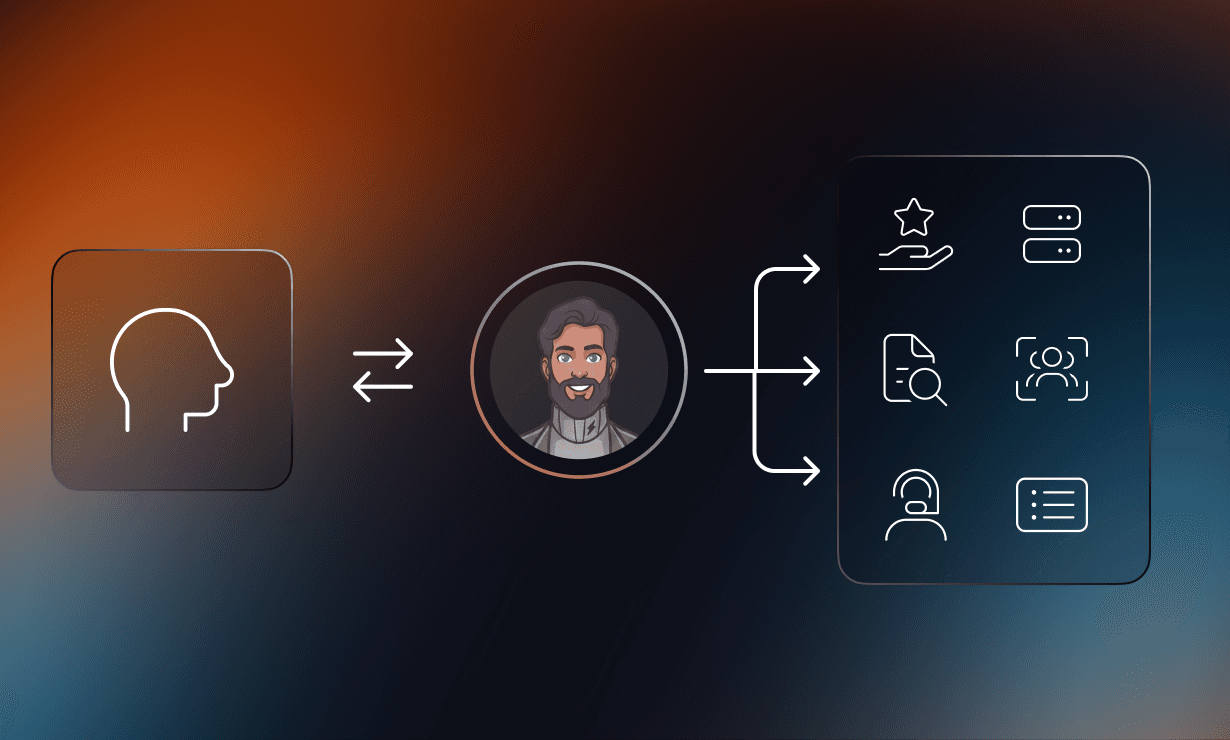
Action 1
Define clear roles where automation adds value. Treat these digital employees like any team member: onboard them, assign ownership, measure performance.
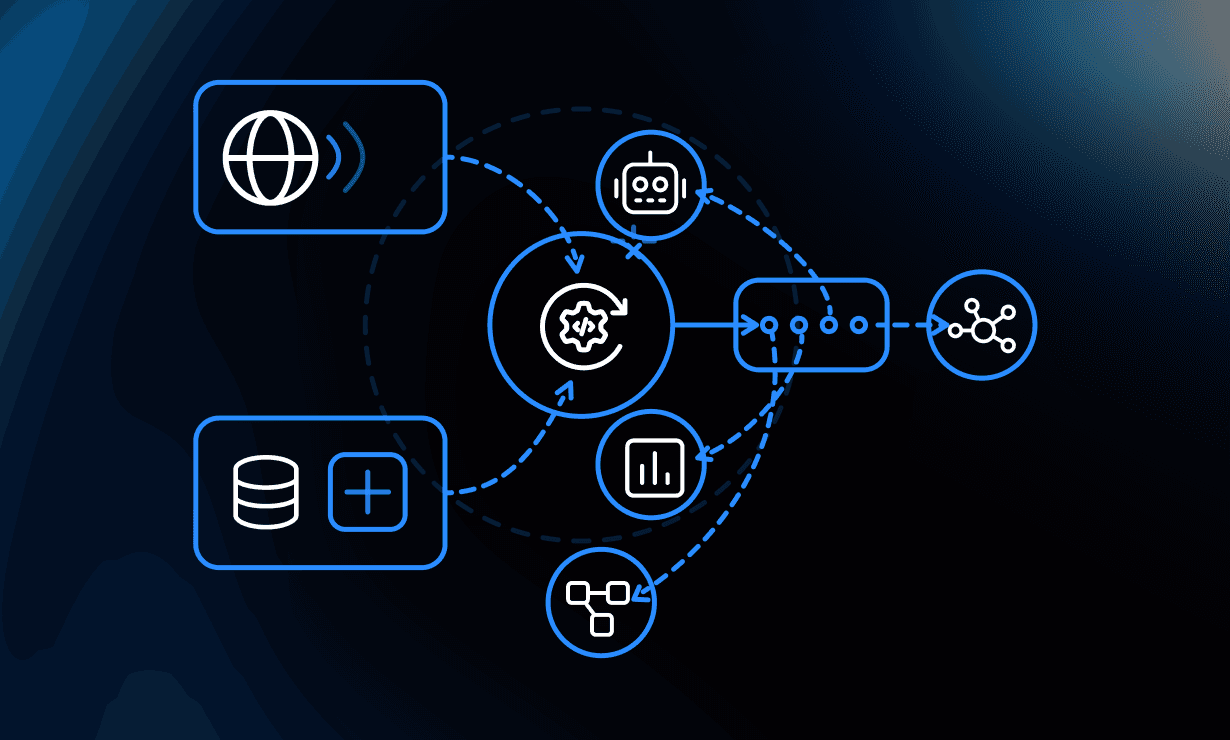
Action 2
Identify processes ripe for full automation - and those where human-AI collaboration unlocks outsize value. Plan for employees to advance as they learn to develop and manage agents.
Action 3
The time for pilots alone has passed. Real change requires broad adoption at every level. Identify high-impact areas. When you find value, reinvest to scale further and faster.
"Imagine knowing what you know today just before the internet changed everything. That's where we are with AI. Knowledge is power, and having it now gives people the agency to lead this moment."
Work Trend Index 2025
The Choice
The window is closing.
The leaders are pulling ahead.
82% of leaders said 2025 was the pivotal year to rethink strategy and operations. Only 22% made the transition. The remaining 78% are now playing catch-up in 2026 - and the gap is widening.
AI fluency is becoming table stakes. It's no longer a differentiator - it's an expectation, like email or spreadsheets. The companies that established norms last year are the ones everyone else will be catching up to for years.
The companies that move now will compound their advantage. They'll attract talent that wants to work at a Frontier Firm. They'll unlock capacity their competitors can't match. They'll operate faster, learn faster, and pull further ahead.
The companies that wait will spend the next 2-5 years catching up - if they can. This isn't about efficiency gains. Companies that don't transform aren't just slower - they're existentially threatened. We've already seen foundational companies, widely adopted, struggling to survive because their operating model didn't evolve.
The question isn't whether AI will restructure your industry. It's whether you'll be the one doing the restructuring or the one being restructured.
Action 1
Define clear roles where automation adds value. Treat these digital employees like any team member: onboard them, assign ownership, measure performance.
Action 2
Identify processes ripe for full automation - and those where human-AI collaboration unlocks outsize value. Plan for employees to advance as they learn to develop and manage agents.
Action 3
The time for pilots alone has passed. Real change requires broad adoption at every level. Identify high-impact areas. When you find value, reinvest to scale further and faster.
"Imagine knowing what you know today just before the internet changed everything. That's where we are with AI. Knowledge is power, and having it now gives people the agency to lead this moment."
Work Trend Index 2025
The Choice
The window is closing.
The leaders are pulling ahead.
82% of leaders said 2025 was the pivotal year to rethink strategy and operations. Only 22% made the transition. The remaining 78% are now playing catch-up in 2026 - and the gap is widening.
AI fluency is becoming table stakes. It's no longer a differentiator - it's an expectation, like email or spreadsheets. The companies that established norms last year are the ones everyone else will be catching up to for years.
The companies that move now will compound their advantage. They'll attract talent that wants to work at a Frontier Firm. They'll unlock capacity their competitors can't match. They'll operate faster, learn faster, and pull further ahead.
The companies that wait will spend the next 2-5 years catching up - if they can. This isn't about efficiency gains. Companies that don't transform aren't just slower - they're existentially threatened. We've already seen foundational companies, widely adopted, struggling to survive because their operating model didn't evolve.
The question isn't whether AI will restructure your industry. It's whether you'll be the one doing the restructuring or the one being restructured.
Action 1
Define clear roles where automation adds value. Treat these digital employees like any team member: onboard them, assign ownership, measure performance.
Action 2
Identify processes ripe for full automation - and those where human-AI collaboration unlocks outsize value. Plan for employees to advance as they learn to develop and manage agents.
Action 3
The time for pilots alone has passed. Real change requires broad adoption at every level. Identify high-impact areas. When you find value, reinvest to scale further and faster.
"Imagine knowing what you know today just before the internet changed everything. That's where we are with AI. Knowledge is power, and having it now gives people the agency to lead this moment."
Work Trend Index 2025
Social Proof
Leaders transforming into Frontier Firms
Customer Testimonials

“Seamless Slack and Salesforce integrations keep our team in sync. Fusion AI ensures everyone’s on the same page.”

Mat Mursmark
Chief Growth Officer
“Fusion AI cut our onboarding time by 50%—setup was effortless, and our AI agents are now core to daily ops.”

Chris Milkulin
Performance Marketer
“Automating lead follow‑ups boosted our conversion rate by 30% without adding headcount. Fusion AI is a game‑changer.”

Audrey Madden
Chief Growth Officer
“Real‑time insights from AI agents help us spot trends before they emerge—our decisions are smarter and faster.”

Jamal Richardson
Head of Analytics
“Seamless Slack and Salesforce integrations keep our team in sync. Fusion AI ensures everyone’s on the same page.”

Priya Desai
Customer Success Manager
“Seamless Slack and Salesforce integrations keep our team in sync. Fusion AI ensures everyone’s on the same page.”
Mat Mursmark
Chief Growth Officer
“Fusion AI cut our onboarding time by 50%—setup was effortless, and our AI agents are now core to daily ops.”
Chris Milkulin
Performance Marketer
“Automating lead follow‑ups boosted our conversion rate by 30% without adding headcount. Fusion AI is a game‑changer.”
Audrey Madden
Chief Growth Officer
“Real‑time insights from AI agents help us spot trends before they emerge—our decisions are smarter and faster.”
Jamal Richardson
Head of Analytics
“Seamless Slack and Salesforce integrations keep our team in sync. Fusion AI ensures everyone’s on the same page.”
Priya Desai
Customer Success Manager
“Seamless Slack and Salesforce integrations keep our team in sync. Fusion AI ensures everyone’s on the same page.”
Mat Mursmark
Chief Growth Officer
“Fusion AI cut our onboarding time by 50%—setup was effortless, and our AI agents are now core to daily ops.”
Chris Milkulin
Performance Marketer
“Automating lead follow‑ups boosted our conversion rate by 30% without adding headcount. Fusion AI is a game‑changer.”
Audrey Madden
Chief Growth Officer
“Real‑time insights from AI agents help us spot trends before they emerge—our decisions are smarter and faster.”
Jamal Richardson
Head of Analytics
“Seamless Slack and Salesforce integrations keep our team in sync. Fusion AI ensures everyone’s on the same page.”
Priya Desai
Customer Success Manager
“Seamless Slack and Salesforce integrations keep our team in sync. Fusion AI ensures everyone’s on the same page.”
Mat Mursmark
Chief Growth Officer
“Fusion AI cut our onboarding time by 50%—setup was effortless, and our AI agents are now core to daily ops.”
Chris Milkulin
Performance Marketer
“Automating lead follow‑ups boosted our conversion rate by 30% without adding headcount. Fusion AI is a game‑changer.”
Audrey Madden
Chief Growth Officer
“Real‑time insights from AI agents help us spot trends before they emerge—our decisions are smarter and faster.”
Jamal Richardson
Head of Analytics
“Seamless Slack and Salesforce integrations keep our team in sync. Fusion AI ensures everyone’s on the same page.”
Priya Desai
Customer Success Manager
“Seamless Slack and Salesforce integrations keep our team in sync. Fusion AI ensures everyone’s on the same page.”
Mat Mursmark
Chief Growth Officer
“Fusion AI cut our onboarding time by 50%—setup was effortless, and our AI agents are now core to daily ops.”
Chris Milkulin
Performance Marketer
“Automating lead follow‑ups boosted our conversion rate by 30% without adding headcount. Fusion AI is a game‑changer.”
Audrey Madden
Chief Growth Officer
“Real‑time insights from AI agents help us spot trends before they emerge—our decisions are smarter and faster.”
Jamal Richardson
Head of Analytics
“Seamless Slack and Salesforce integrations keep our team in sync. Fusion AI ensures everyone’s on the same page.”
Priya Desai
Customer Success Manager
“Seamless Slack and Salesforce integrations keep our team in sync. Fusion AI ensures everyone’s on the same page.”
Mat Mursmark
Chief Growth Officer
“Fusion AI cut our onboarding time by 50%—setup was effortless, and our AI agents are now core to daily ops.”
Chris Milkulin
Performance Marketer
“Automating lead follow‑ups boosted our conversion rate by 30% without adding headcount. Fusion AI is a game‑changer.”
Audrey Madden
Chief Growth Officer
“Real‑time insights from AI agents help us spot trends before they emerge—our decisions are smarter and faster.”
Jamal Richardson
Head of Analytics
“Seamless Slack and Salesforce integrations keep our team in sync. Fusion AI ensures everyone’s on the same page.”
Priya Desai
Customer Success Manager
Industry Validation
Organization
Initiative
Work Trend Index: Frontier Firm concept, 31,000 workers, 31 countries
Work Trend Index: Frontier Firm concept, 31,000 workers, 31 countries

Digital Data Design Institute Frontier Firm AI Initiative (BNY, Barclays, Levi's, Lumen)
Digital Data Design Institute Frontier Firm AI Initiative (BNY, Barclays, Levi's, Lumen)

Frontier Firms achieve 3X higher returns than slow adopters
Frontier Firms achieve 3X higher returns than slow adopters
The transformation is already underway.
The question is whether you'll lead it.
You run the business. We'll handle the AI infrastructure.
You run the business. We'll handle the AI infrastructure.
The landscape changes monthly. Your foundation evolves with it. New models emerge. Protocols shift. Costs fluctuate. Security requirements tighten. FraiOS delivers the eight essential capabilities AND keeps them current.
The landscape changes monthly. Your foundation evolves with it. New models emerge. Protocols shift. Costs fluctuate. Security requirements tighten. FraiOS delivers the eight essential capabilities AND keeps them current.
Visit the Platform Page
Explore the four-pillar architecture